Lead Paint Removal in Older Brisbane Homes: How Lead Paint Is Found and Removed Before a Repaint
Many homes across the Redlands, Bayside and wider Brisbane were painted long before lead was taken out of house paint. On an older house, the first coats on the weatherboards, the window frames and the skirting boards can still be lead based paint, sitting under decades of later repaints. The risk starts when someone scrapes, sands or heats it during preparation for a repaint.
This guide explains how to tell whether your home is likely to have lead paint, how lead paint is found, how lead paint removal is done safely before new paint goes on, and what to ask a painter before work starts.
The short version
- Homes built before 1970 are the most likely to have lead paint, but newer homes can have it too.
- Lead paint in good condition can be painted over. Flaking, chalking or peeling lead paint needs more care.
- Dry sanding, dry scraping and blasting old lead paint spread fine lead dust through the house and garden.
- Young children, pregnant women and breastfeeding mothers face the greatest risk from lead dust.
Does my older Brisbane or Redlands home have lead paint?
If your home was built before 1970, it probably has lead paint somewhere under the newer coats. The Australian Government’s Lead Alert: The six step guide to painting your home says homes built before 1970 are the most at risk, and that homes built more recently may also have paint containing lead.
The same guide sets out how the lead content of house paint came down over time. Paints containing as much as 50 per cent lead were used inside and outside homes built before 1950. As a rule of thumb, the lead content of paint was limited to 1 per cent by 1970, and the limit has been 0.1 per cent since December 1997. Homes built after 1970 can still carry paint with more than 1 per cent lead, particularly where old paint, industrial paint or marine paint was used.
Queensland has its own history here. The Queensland Government’s lead-based paint page says a Queensland law passed in 1923 limited the amount of lead used to make paint, but paint made in other states still contained higher levels of lead and was often used in Queensland. That is why lead paint still turns up on Queensland homes today.
Where lead paint is usually found on an older house
Lead paint is usually found on the timber and the trims of an older house rather than in one obvious place. The Lead Alert guide says white lead was the main white pigment in most interior and exterior house paints for many years. It was used in topcoats on structural timbers, weatherboards, window and door frames, cement render, fences and railings.
The guide also names pink primer, a mix of red and white lead, which was used as an undercoat on interior and exterior timber and as a primer on plaster and rendered walls. Red lead primer was often used on timber window sills well into the 1970s. On a brick home, the painted window frames, door frames and timber trims are the places to think about. On a weatherboard home, the boards themselves are part of the list.
Inside, the surfaces that get knocked and rubbed matter most. The guide lists architraves, skirting boards, balustrades, stair treads and sash windows as areas likely to be knocked, chipped, chewed by children or worn by friction.
Is lead paint dangerous if it is left alone?
Lead paint in good condition is not the main concern. The Queensland Government’s guidance for public housing tenants says lead-based paint in good condition, not flaking or powdery, is not a cause for concern, and it notes that thousands of homes in Queensland have lead-based paint.
The danger comes from dust, flakes and fumes. The same page says lead poisoning can happen when sanders and grinders are used to remove paint, because sanding and grinding make a lot of lead contaminated dust that can be breathed in or swallowed. Paint that is peeling, flaking or chalking is also a hazard to young children, who may pick up flakes and eat them. Lead-based paint can contaminate the soil around a home as well.
Children are the most exposed. The Lead Alert guide says children can absorb up to 60 per cent of the lead they swallow, while adults absorb about one tenth. It also says lead in a mother’s blood passes through the placenta to an unborn baby, and that breastfeeding mothers can pass lead to their infants through breastmilk. Safe Work Australia explains that lead is stored in the teeth and bones and can build up in the body with repeated exposure.
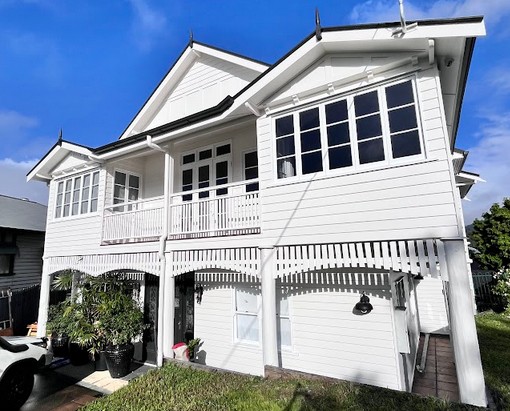
How to tell if paint has lead in it
You can only be sure by testing the paint. The Lead Alert guide describes three ways to test: colour change test kits from hardware and paint suppliers, portable X-ray fluorescence equipment operated by a professional, and laboratory analysis of paint samples.
The guide warns that colour change test kits can give false negative and false positive results, and that the colour change is hard to see on dark paint. It recommends testing all layers of paint, or at least the oldest layers, because the bottom layers are the ones most likely to contain lead. If a test kit shows no lead but the age of the house suggests lead paint could have been used, the guide says to assume lead paint is present or to have the paint tested by a laboratory.
For laboratory testing, the guide recommends a laboratory accredited by NATA, the National Association of Testing Authorities.
How lead paint removal is done before a repaint
Safe lead paint removal keeps the dust down, catches the paint flakes and keeps the waste out of the garden and the drains. The Lead Alert guide names the methods to avoid. It says not to dry sand or use abrasive blasting, and it lists blasting, burning, dry scraping, dry sanding and power tool cleaning as the methods that create the most serious dangers.
The methods the guide describes instead include wet scraping, wet sanding with wet and dry sandpaper, chemical stripping, and dry power sanding with a HEPA vacuum attachment. It says the HEPA sanding method should only be done by contractors with the right training and experience. Where a heat gun is used to soften thick paint on flat surfaces, the guide says nozzle temperatures should stay below 370°C, because lead fumes form at higher temperatures.
Not every surface needs stripping back. The guide says lead paint in good condition that is not flaking or chalking can be covered by painting over it. It also says painting over is a temporary measure that lasts as long as the paint and the surface hold up, and that the only way to remove the hazard is to remove deteriorating lead paint safely.
Protecting your family, your garden and your neighbours during lead paint removal
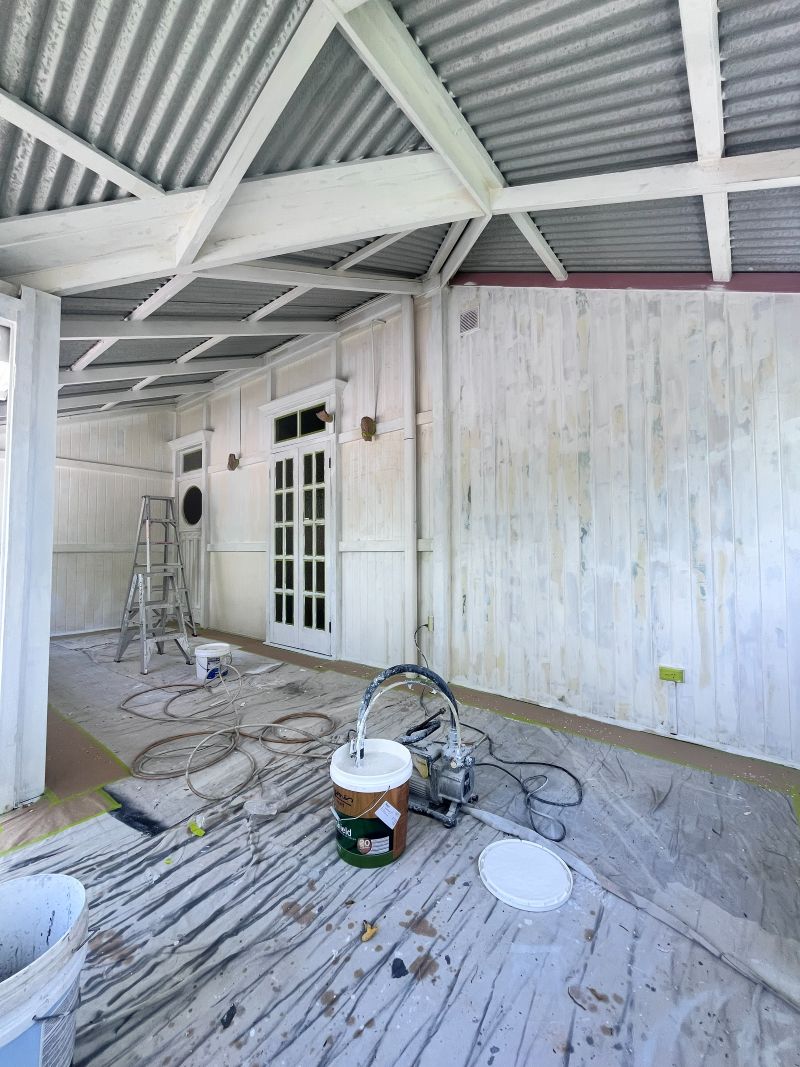
The Lead Alert guide says the areas around the work should be covered or sealed off so lead dust does not contaminate other parts of the home. For exterior work, the guide says to cover the ground and garden with plastic sheeting that reaches two metres out from the base of the home, with an extra metre for each storey. It says not to work on windy or wet days, because dust and flakes can be blown or washed off the sheeting.
The guide also says pregnant or breastfeeding women, women wishing to conceive, young children and pets should leave the home whenever lead paint is disturbed, and should not return until all dust and debris has been cleared away. It recommends telling the neighbours before exterior work starts, so they can close their windows and cover sandpits and pools.
For the clean up, the guide says to use a vacuum cleaner fitted with a HEPA filter, not a broom or an ordinary vacuum, and not to pour lead contaminated water down the drains or onto the garden. It says lead paint waste can be classified as hazardous waste and must be disposed of under state, territory or local government requirements, and that timber coated with lead paint must never be burnt.
What to ask a painter about lead paint removal
The Lead Alert guide includes a checklist for homeowners getting quotes for lead paint removal. It suggests asking the painter whether they have tested the paint for lead, which detection method they used, which removal method they plan to use, and for a detailed description of the preparation, containment and cleaning process they will follow.
The checklist also refers homeowners to the Australian Standard AS 4361.2, the Guide to Lead Paint Management Part 2: Residential and commercial buildings, for the special precautions on preparation and decontamination.
How we handle lead paint before repainting your home
Lead paint removal is part of what we do at Barton’s Painting and Decorating. On the older Queenslanders we paint, we test before we sand, and where lead is present the paint is removed under lead safe practice rather than sanded dry into the garden.
If your home is older and you think it may have lead based paint, please tell us when you book the quote. Old lead paint changes how the surfaces are prepared. It changes the method, the containment and the time on site, and we will explain how we plan to handle it at your home.
If you own an older Queenslander, our guide to painting a Queenslander and what is involved covers the preparation of weatherboards, VJ walls and verandah timber, with a section on lead paint under the old weatherboard coats. For brick, rendered and weatherboard homes, our exterior painting page explains how we prepare and paint the outside of the house, and our interior painting page covers walls, ceilings, doors and trims. If old paint is already lifting on your home, our post on peeling paint on Redlands homes explains the common causes.
Frequently Asked Questions About Lead Paint Removal
Can you paint over lead paint?
Yes, if the lead paint is in good condition and is not flaking or chalking. The Lead Alert guide says sound lead paint can be covered by painting over it. It also says painting over is a temporary measure, so the painted surfaces need checking for wear over time.
Is it safe to sand lead paint?
Dry sanding is not safe. The Lead Alert guide says not to dry sand, and the Queensland Government says sanders and grinders make lead contaminated dust that can be breathed in or swallowed. Wet sanding and wet scraping keep the dust down, and HEPA sanding should only be done by trained contractors.
How do I know if my house has lead paint?
A home built before 1970 probably has lead paint somewhere under the newer coats. The only way to be sure is to test the paint, ideally the oldest layers. The Lead Alert guide warns that home test kits can give false results and recommends a NATA accredited laboratory for analysis.
Do I need to move out during lead paint removal?
The Lead Alert guide says pregnant or breastfeeding women, women wishing to conceive, young children and pets should leave the home whenever lead paint is disturbed. They should not return until all the dust and debris has been cleared away. Talk this through with your painter when you plan the dates.
Does Barton’s Painting and Decorating do lead paint removal?
Yes. Lead paint removal is part of what we do. If your home is older and you think it may have lead based paint, please mention it when you book the quote, and we will explain how we plan to handle it at your home.
Getting a quote for painting an older home
Barton’s Painting and Decorating was established in 2015 and paints homes across the Redlands and Bayside. Our own team does the work, with no subcontractors, and we hold QBCC contractor licence 15315253 and are fully insured.
If you are planning to repaint an older home, call 0434 575 623 or send us the details through the contact page. Let us know roughly when the house was built and whether the old paint is flaking or chalking, and photos of the worst areas help.